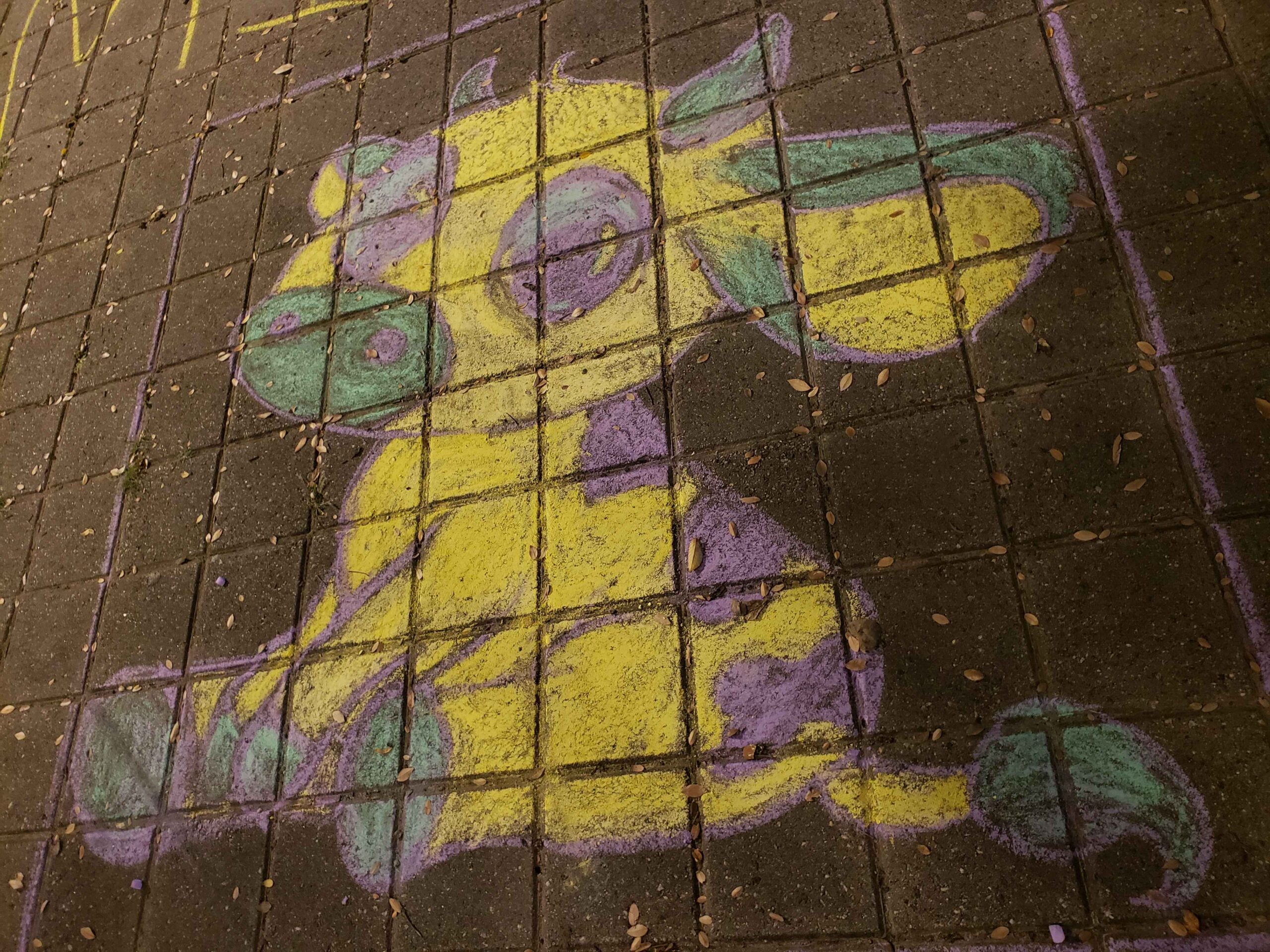
An incredible cow chalked by NC activist Eight Crows
Why should I host a chalking event?
An important part of leading an animal advocacy group is prioritizing your community and engaging new advocates in outreach styles that feel comfortable for them. The idea of having direct outreach conversations can seem intimidating to many, creating a need for inclusive, low-intensity (and fun!) advocacy events where new activists can take their first steps. This is where chalking events can come in! These events are a great way to enjoy activism with the members of your chapter, building community and developing friendships (especially if you go out together for some tasty vegan food after the event 😋).
Does chalk really make an impact?
Some activists have been skeptical about the impacts of chalk messages. Can we achieve animal liberation with nothing but a $5 box of washable sidewalk chalk? Maybe not. However, when done right, chalk messages can certainly inspire individuals to learn, grow, and change. Planting these seeds across our student bodies can create awareness of our movement to end animal exploitation, providing students with the opportunity to further educate themselves and potentially even get involved!
The core principles of chalk messaging
Chalk messages should be:
- Educational
- Introspective
- Inspirational
Be careful with accusatory messaging
While accusatory messages may work on a certain audience, our chalking events aim to give a positive impression to the student body as a whole. When inspiring peers to consider standing against animal exploitation, it’s important that they feel they can belong within the vegan community. Accusatory messaging may evoke feelings of alienation from the animal rights community, giving the impression that vegans are unfriendly or judgmental. Never underestimate the power of social proof!
Tips for positive messaging
It is vital that we stay mindful of our language to avoid shameful or accusatory tones. In brief messages, subtle shifts can go a long way. For example, using “we” instead of “you” in statements.
- “When you pay for animal products, you demand for the exploitation to continue”
- “When we pay for animal products, we demand for the exploitation to continue”
The first statement singles out the reader, causing them to feel like we are putting the blame on them; this can reinforce the stereotype that vegans act morally superior which is the opposite of what we want! The second statement reflects this as a mutual truth, avoiding the sense of “othering.”
Check with your university’s guidelines
Your university may have rules regulating the use of chalk. You’ll want to find their guidelines to be sure your group is avoiding trouble. First, make sure you are permitted to use chalk on campus grounds; private schools often have higher restrictions and only allow chalking from registered student organizations. Take time to understand where the use of chalk is and is not allowed; some universities prohibit use of chalk on walls, near drainage, and other specified areas. We suggest making note of these rules to share with your fellow chalkers before the event!
If you are having trouble finding or understanding your university’s guidelines, we are here to help!
Choosing a day to chalk
Unlike many other events, it’s not always a good idea to plan a chalking event far in advance; weather is an important, yet relatively unpredictable variable to consider. You’ll want to choose a clear day that is followed by several more days without rain—chalk’s greatest enemy. Another consideration when planning a date is maximizing the eyes that will be on your chalk. This could mean chalking before significant events, such as football games, concerts, or other occasions that may bring a crowd to campus. Any events centered around animals, the environment, or other intersecting topics could be especially great choices.